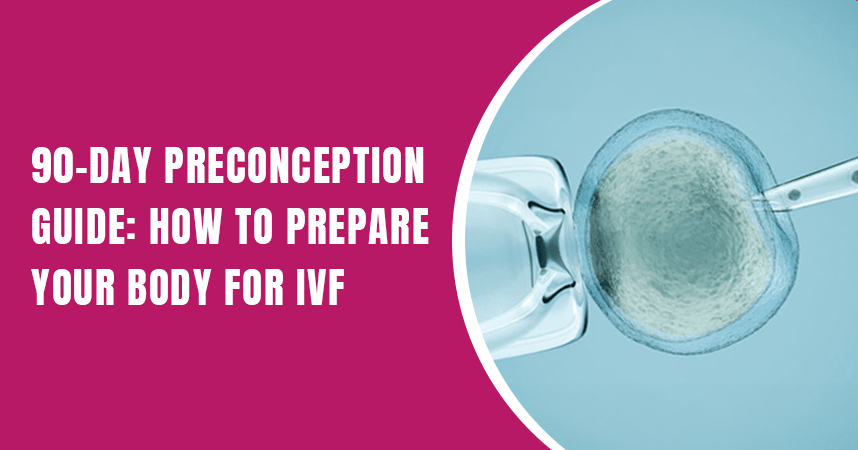
Starting your IVF journey is one of the most important decisions you will ever make. But here is something many couples do not know: the 90 days before your IVF cycle may matter just as much as the cycle itself. In fertility medicine, this pre-treatment window is called the preconception period, and it is your best opportunity to optimise egg quality, sperm health, uterine environment, and overall wellbeing — all before the first injection is given.
This comprehensive guide walks you through exactly what to do, month by month, to give your IVF cycle the best possible foundation.
Why 90 Days? The Science Behind It
Eggs (oocytes) take approximately 90 days to undergo their final maturation phase before ovulation. During this folliculogenesis window, eggs are actively influenced by nutrition, hormone balance, oxidative stress, and blood flow. Similarly, sperm take 72 to 90 days to mature in the testes. Every lifestyle choice you make today directly affects the quality of the reproductive cells that will be used in your IVF cycle three months from now.
This is not a theory — it is reproductive biology. The 90-day window is your opportunity to intervene meaningfully and naturally, before medical treatment begins.
Month 1: Building the Foundation (Days 1–30)
Step 1: Get a Comprehensive Fertility Work-Up
Before making any changes, you need a clear picture of your starting point. A thorough baseline evaluation should include:
- AMH (Anti-Müllerian Hormone) — your ovarian reserve marker
- AFC (Antral Follicle Count) — ultrasound count of resting follicles
- FSH and LH levels on Day 2–3 of the cycle
- Thyroid function (TSH, T3, T4) — thyroid disorders are among the most commonly missed causes of infertility
- Semen analysis for your partner — count, motility, morphology, DNA fragmentation
- Uterine cavity assessment via 3D ultrasound or sonohysterogram
If you have not yet had these tests, visit the Best IVF Centre in Lucknow — URvara Fertility Centre — for a complete preconception assessment tailored to your reproductive profile.
Step 2: Stop Smoking and Alcohol — Completely
Both smoking and alcohol are among the most well-documented, modifiable causes of IVF failure. Smoking reduces ovarian reserve, damages sperm DNA, and decreases implantation rates by up to 50% in chronic smokers. Alcohol disrupts hormonal signalling, lowers oocyte quality, and increases the risk of early miscarriage. Month 1 is the time to stop both, completely.
Nicotine replacement therapy and physician-guided cessation programmes are available — speak to your GP if you need support quitting smoking.
Step 3: Begin a High-Quality Prenatal Supplement
Start a prenatal supplement that includes at minimum:
- Folic acid (400–800 mcg) — essential for neural tube development and DNA synthesis
- Vitamin D3 (2000–4000 IU) — deficiency is widespread in India and linked to lower IVF success rates
- CoQ10 (Ubiquinol, 200–600 mg) — supports mitochondrial function in eggs and sperm
- Omega-3 fatty acids — anti-inflammatory and supportive of hormonal health
- Vitamin B12 — especially important for vegetarians who may be deficient
Always purchase supplements from reputable brands and discuss doses with your fertility specialist, as some supplements interact with medications.
Month 2: Optimising Your Health (Days 31–60)
Transition to a Mediterranean-Style Fertility Diet
Research published in the journal Human Reproduction has consistently linked Mediterranean-style eating patterns to improved IVF outcomes. This diet emphasises:
- Abundant leafy greens — spinach, kale, fenugreek (methi), broccoli — for folate and iron
- Colourful berries and fruits — pomegranate, amla, blueberries — for antioxidant protection
- Whole grains — brown rice, oats, whole wheat — for blood sugar control
- Healthy fats — olive oil, avocado, walnuts, almonds — for hormonal production
- Lean proteins — fish, legumes, eggs, paneer — for amino acid support
- Full-fat dairy in moderation — Harvard research links it to improved ovulatory function
Reduce processed foods, refined sugar, trans fats, and high-mercury fish (swordfish, shark, king mackerel). Limit caffeine to under 200 mg per day — approximately one cup of filter coffee.
Exercise Wisely — Not Excessively
Moderate exercise supports a healthy BMI, reduces cortisol, and improves insulin sensitivity. Aim for 30–45 minutes of moderate movement five days a week: brisk walking, swimming, gentle cycling, or yoga. Avoid extreme or high-intensity workouts during this phase, as excessive cortisol production can suppress reproductive hormones. This is not the time for marathon training or aggressive weight loss programmes.
Prioritise Sleep
Sleep is profoundly linked to fertility. Poor sleep disrupts melatonin production — and melatonin is not just a sleep hormone. It is also a potent antioxidant that protects egg quality in the follicle. Aim for 7–9 hours of uninterrupted sleep per night. Consistent sleep and wake times, a dark bedroom, and limiting screen time before bed all support healthy sleep architecture.
Month 3: Fine-Tuning Before the Cycle (Days 61–90)
Achieve Your Target BMI
Both underweight (BMI below 18.5) and overweight (BMI above 29.9) conditions significantly affect IVF outcomes. Overweight women produce fewer eggs, have lower fertilisation rates, and face higher miscarriage risk. Underweight women may have thin uterine linings and poor hormonal responses. The sweet spot is a BMI between 18.5 and 24.9. Even a 5–10% reduction in BMI in overweight women has been shown to meaningfully improve IVF success rates.
Reduce Endocrine Disruptor Exposure
Environmental toxins called endocrine disruptors mimic or block oestrogen in the body. Common sources include:
- BPA in plastic water bottles and food containers — switch to glass or stainless steel
- Parabens and phthalates in personal care products — choose natural, fragrance-free alternatives
- Pesticide residues on fruits and vegetables — wash produce thoroughly or choose organic where possible
- Non-stick cookware coatings — consider switching to cast iron or stainless steel
These changes are simple but meaningful. The fertility environment is shaped by far more than what happens inside a clinic.
Mental and Emotional Preparation
IVF is not just a physical experience — it is an emotional one. Use the third month to begin building your psychological resilience. Consider joining a fertility support group, beginning mindfulness practice, or speaking with a counsellor experienced in reproductive health. Research confirms that patients who approach IVF with greater psychological preparedness report better treatment experiences and are more likely to complete recommended treatment cycles.
Your 90-Day Preconception Checklist
- Complete a full fertility baseline assessment for both partners
- Quit smoking and alcohol immediately — both partners
- Begin prenatal supplements including folic acid, CoQ10, and Vitamin D3
- Adopt a Mediterranean-style diet rich in antioxidants and healthy fats
- Exercise moderately — 30 to 45 minutes, five days a week
- Sleep 7 to 9 hours per night consistently
- Achieve a BMI in the 18.5–24.9 range
- Reduce exposure to BPA, parabens, and pesticides
- Begin stress management: mindfulness, journaling, or counselling
- Confirm your IVF start date and pretreatment schedule with your clinic
When to Seek Expert Help
If you have been trying to conceive for over a year — or six months if you are over 35 — do not wait longer. Early specialist consultation saves precious time and reduces the emotional toll of delayed diagnosis.
The Top IVF Centre in Lucknow — URvara Fertility Centre — offers personalised preconception planning so that you walk into your IVF cycle in the best possible physical and emotional health. Begin your journey today.
Disclaimer: This article is for informational purposes only and does not constitute medical advice. IVF outcomes vary based on individual health conditions. Always consult a qualified fertility specialist before making any medical decisions. The information provided here is based on current medical knowledge (2026) and should not replace professional diagnosis or treatment.